
Romans 9

|
Romans 9:1-5:
I tell the truth in Christ, I am not lying, my conscience also bearing me witness in the Holy Spirit, 2 that I have great sorrow and continual grief in my heart. 3 For I could wish that I myself were accursed from Christ for my brethren, my countrymen according to the flesh, 4 who are Israelites, to whom pertain the adoption, the glory, the covenants, the giving of the law, the service of God, and the promises; 5 of whom are the fathers and from whom, according to the flesh, Christ came, who is over all, the eternally blessed God. Amen. |
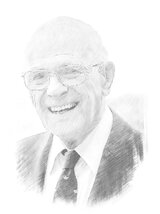 Michael Green Michael Green
“We are not called to constant success. We are not called to instant glory now. We live between the ages; heirs to all the failure and frailty and fallenness of this age, heirs too to the power and life and loveof the age to come. We live at the cross roads. The Master suffered . . . and rose. So will hisapostolic church . . .”
~ Michael Green; Author of To Corinth with Love |
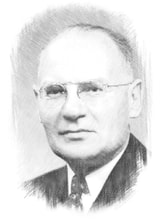 V Raymond Edman
“When you know what God has done for you, the power and the tyranny of sin is gone and the radiant, unspeakable emancipation of the indwelling Christ has come, and when you see men and women who should be princes and princesses with God bound up by the show of things - oh, you begin to understand what the Apostle meant when he said he wished himself accursed from Christ that men might be saved!”
― V. Raymond Edman, They Found the Secret

|
Romans 9:6-10:
6 But it is not that the word of God has taken no effect. For they are not all Israel who are of Israel, 7 nor are they all children because they are the seed of Abraham; but, “In Isaac your seed shall be called.” 8 That is, those who are the children of the flesh, these are not the children of God; but the children of the promise are counted as the seed. 9 For this is the word of promise: “At this time I will come and Sarah shall have a son.” 10 And not only this, but when Rebecca also had conceived by one man, even by our father Isaac |
Why has Israel not believed in Jesus as their Messiah? The first part of Paul’s answer is that: It is not because God is unfaithful. Paul says it is not as though God’s word has failed. Yes, God promised to save a particular people called Israel. However, Paul says, not all physical Israel is the true spiritual Israel. God chose Isaac and not Ishmael. Not only that, Paul says, after God chose Isaac, he did not choose all of Isaac’s children. Isaac and Rebekah had twin boys, Esau and Jacob. However, before the twins were born, God chose Jacob. Paul says God did it this way so that his own purpose in election might stand, so that God’s choice was not based on Jacob or Esau’s works. [SOURCE: Will Vaus] |

|
Romans 9:11-13:
11 (for the children not yet being born, nor having done any good or evil, that the purpose of God according to election might stand, not of works but of Him who calls), 12 it was said to her, “The older shall serve the younger.” 13 As it is written, “Jacob I have loved, but Esau I have hated.” |
On Romans 9:11–13 regarding God loving Jacob but hating Esau he writes: “God did not elect anyone’s works (which God himself will grant) by foreknowledge, but rather by foreknowledge he chose faith, so that he chooses precisely him whom he foreknew would believe in him; and to him he gives the Holy Spirit, so that by doing good works he will as well attain eternal life” As Paula Fredriksen affirms, Augustine claims in this work that “God thus chose Jacob because he foreknew that he would respond with good will to his call, which Esau would spurn; he hardened Pharaoh [Rom 9:14–18], foreknowing the infidelity that would greet his call. (exp. prop. Rm. 55, 60–62) -In Christ |

|
Romans 9:16-23:
So then it is not of him who wills, nor of him who runs, but of God who shows mercy. 17 For the Scripture says to Pharaoh, "For this very purpose I have raised you up, that I may show My power in you, and that My name may be declared in all the earth." 18 Therefore He has mercy on whom He wills, and whom He wills He hardens. 19 You will say to me then, "Why does He still find fault? For who has resisted His will?" 20 But indeed, O man, who are you to reply against God? Will the thing formed say to him who formed it, "Why have you made me like this?" 21 Does not the potter have power over the clay, from the same lump to make one vessel for honor and another for dishonor? 22 What if God, wanting to show His wrath and to make His power known, endured with much longsuffering the vessels of wrath prepared for destruction, 23 and that He might make known the riches of His glory on the vessels of mercy, which He had prepared beforehand for glory, |

The Armenian doesn't understand the sovereignty of God, so he doesn't understand that every circumstance in his life is under the total control of God. Peace of mind comes from trusting in God, not in yourself.
C. H. Spurgeon said, "If you believe that everything turns on the free will of man, you will naturally have man as the principle figure in your landscape." This can really cause anxiety, because man is fickle, man is weak, so you have every reason to worry. Armenian theology is man centered and the cause of many of the churches' problems. The bottom line is that if you're trusting yourself, you're not trusting God. And if you're trusting in yourself, you are going to end up worrying, you'll be anxious and unstable. Emit Fox said this, "What you think God is like will determine your whole life, that is the central question we all have to wrestle with." -Berean Bible Church |

|
Romans 9:19-29:
You will say to me then, “Why does He still find fault? For who has resisted His will?” 20 But indeed, O man, who are you to reply against God? Will the thing formed say to him who formed it, “Why have you made me like this?” 21 Does not the potter have power over the clay, from the same lump to make one vessel for honor and another for dishonor? 22 What if God, wanting to show His wrath and to make His power known, endured with much longsuffering the vessels of wrath prepared for destruction, 23 and that He might make known the riches of His glory on the vessels of mercy, which He had prepared beforehand for glory, 24 even us whom He called, not of the Jews only, but also of the Gentiles? 25 As He says also in Hosea: “I will call them My people, who were not My people, And her beloved, who was not beloved.” 26 “And it shall come to pass in the place where it was said to them, ‘You are not My people,’ There they shall be called sons of the living God.” 27 Isaiah also cries out concerning Israel: “Though the number of the children of Israel be as the sand of the sea, The remnant will be saved. 28 For He will finish the work and cut it short in righteousness, Because the Lord will make a short work upon the earth.” 29 And as Isaiah said before: “Unless the Lord of Sabaoth had left us a seed, We would have become like Sodom, And we would have been made like Gomorrah.” |
Paul turns at this point to the person who complains that God has no right to condemn. God is the creator of all things and has mandated how the world will be. How can he then condemn the world? Some things are made to bring great glory to God and other things are not. However, Paul’s argument turns to the relationship between a creator and his creation. Using logic, he argues that all people know that a creator has rights over his creation. If the creator destroys or lifts up his or her own creation it is up to them. It is their right. [SOURCE: Plymothian] |

|
Romans 9:30-33:
What shall we say then? That Gentiles, who did not pursue righteousness, have attained to righteousness, even the righteousness of faith; 31 but Israel, pursuing the law of righteousness, has not attained to the law of righteousness. 32 Why? Because they did not seek it by faith, but as it were, by the works of the law. For they stumbled at that stumbling stone. 33 As it is written: “Behold, I lay in Zion a stumbling stone and rock of offense, And whoever believes on Him will not be put to shame.” |
Unbelief is in reality cosmic treason against God. It is a boldface defiance of God. In fact, unbelief calls God a liar and repudiates His Word. It is an utter rejection of God. Unbelief slams the door shut that leads to heaven. Unbelief is so serious that there is no forgiveness for the sin of unbelief if one dies in unbelief. It is blasphemy against the Holy Spirit. Unbelief tramples underfoot the precious blood of the Lord Jesus Christ and despises the blood of Christ as an unclean thing, as the blood of mere pigs. Unbelief insults the Holy Spirit. The Holy Spirit has come into the world to convict men of sin and righteousness and judgment, John 16:8 through 11. And number one on that list is the sin of unbelief. The Holy Spirit has primarily and principally come into this world to convict men of the sin of unbelief because they believe not. Unbelief damns the soul. Unbelief refuses the grace of God. Unbelief is arrogance and pride on steroids at the highest level. Unbelief prizes other things more than God. Unbelief refuses Jesus Christ His rightful place to reign in the human heart. Unbelief refuses God’s diagnosis of your spiritual condition, and unbelief refuses the only remedy that can cure from sin. That is how serious unbelief is. And ultimately, unbelief is not an intellectual issue. It is a heart issue, and that is what Paul is addressing. --One Passion |