
Romans 1

 JI Packer
“All roads in the Bible lead to Romans, and all views afforded by the Bible are seen most clearly from Romans, and when the message of Romans gets into a person’s heart there is no telling what may happen.” --JI Packer
John Calvin said of this book, "When anyone gains a knowledge of this Epistle he has an entrance opened to him to all the most hidden treasures of Scripture." Frederic Louis Godet believed, "The probability is that every great spiritual revival in the church will be connected as effect and cause with a deeper understanding of [the book of Romans]" Martin Luther called Romans "The masterpiece of the New Testament.

|
Romans 1:1:
Paul, a servant of Jesus Christ, called to be an apostle, separated unto the gospel of God, |

The basic Greek word (aphorismenos) behind “set apart” ("separated unto") is one from which we get our English word “horizon.” It was as if Paul had climbed up to the pinnacle of a crow’s nest of a ship. As far as Paul’s eyes could see, as he scanned life’s horizon, he saw “Gospel.” The word translated “servant” means “slave,” one who is subject to the will and wholly at the disposal of his master. For a Roman citizen, such as Paul was, could have identified himself as such, but instead chose to speak of himself as one dependent on and obedient to his Master. He wisely emphasized the highest allegiance that ought to mark a believer.
Paul was one of the few Christians who could speak of being literally called (kletos) by God and one who identified himself and one who was “called as an apostle.” Jesus audibly spoke to Paul on the road to Damascus. He had certainly not sought this position. Nor had he signed up for it. He would state, “God…set me apart even from my mother’s womb and called me through His grace, was pleased to reveal His Son in me so that I might preach Him among the Gentiles” (Galatians 1:15-16). The title “apostle” designated authority to set up and supervise churches and discipline them if necessary. (This word (apostolos) means ‘one who is sent’ or ‘a sent one.’ It referred to a delegate or messenger who has been officially commissioned on a mission.) |
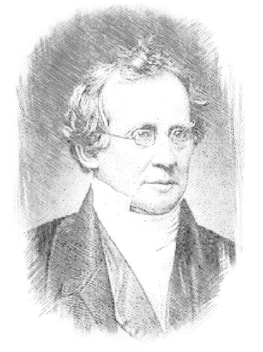 Charles Hodge
I beseech you, therefore, brethren, by the mercies of God, etc. As the sum of all that Paul had said of the justification, sanctification, and salvation of men is, that these results are to be attributed not to human merit nor to human efforts, but to the mercy of God, he brings the whole discussion to bear as a motive for devotion to God. Whatever gratitude the soul feels for pardon, purity, and the sure prospect of eternal life, is called forth to secure its consecration to that God who is the author of all these mercies.
That ye present your bodies a living sacrifice, holy, acceptable unto God. All the expressions of this clause seem to have an obvious reference to the services of the Old Testament economy. Under that dispensation, animals free from blemish were presented and devoted to God; under the new dispensation a nobler and more spiritual service is to be rendered; not the oblation of animals, but the consecration of ourselves. The expression, your bodies, is perhaps nearly equivalent to yourselves; yet Paul probably used it with design, not only because it was appropriate to the figure, but because he wished to render the idea prominent, that the whole man, body as well as soul, was to be devoted to the service of God. "Ye are bought with a price; therefore glorify God, in your body, and in your spirit, which are God's," 1 Corinthians 6:20. The apostle carries the figure out; the sacrifice is to be living, holy, and acceptable. The first of these epithets is generally considered as intended to express the contrast between the sacrifice here intended, and the victims which were placed lifeless upon the altar; thus believers, in 1 Peter 2:5, are called "living stones," in opposition to the senseless materials employed in a literal building. We are to present θυσίαν ζῶσαν, a sacrifice that lives. "Abominabile est, cadaver offere."—Bengel. The word living, however, may mean perpetual, lasting, never neglected; as in the phrases, "living bread," John 6:51, 'bread which never looses its power;' "living hope," 1 Peter 1:3, 'hope which never fails;' "living waters," "a living way," etc.; (see Wahl's Lexicon, under the word ζάω.) The sacrifice then which we are to make is not a transient service, like the oblation of a victim, which was in a few moments consumed upon the altar, but it is a living or perpetual sacrifice never to be neglected or recalled. The epithet holy has probably direct reference to the frequent use of a nearly corresponding word (תָּמִים) in the Hebrew scriptures, which, when applied to sacrifices, is commonly rendered without blemish. The word holy is then in this case equivalent to immaculate, i.e. free from those defects which would cause an offering to be rejected. The term acceptable is here used in the same sense as the phrase, "for a sweet smelling savor," Ephesians 5:2; Philippians 4:18; Leviticus 1:9, i.e. grateful, well-pleasing; a sacrifice in which God delights. Τῷ Θεῷ is to be connected with εὐάρεστον and not with παραστῆσαι.
Your reasonable service. There is doubt as to the grammatical construction of this clause. The most natural and simple explanation is to consider it in opposition with the preceding member of the sentence, as has been done by our translators, who supply the words which is. This consecration of ourselves to God, which the apostle requires, is a reasonable service. The word λοτρεία does not mean an offering, but worship. It is not the thing offered that is said to be reasonable in the sense of, endowed with reason, but the nature of the service. It is rendered by the mind. The word (λογικήν) rendered reasonable, is indeed variously explained. The simplest interpretation is that which takes the word in its natural sense, viz., pertaining to the mind; it is a mental or spiritual service, in opposition to ceremonial and external observations. Compare the phrase (λογικὸν γάλα) 'milk suited, or pertaining to the mind,' 1 Peter 2:2. Others understand these words as expressing the difference between the sacrifices under the Christian dispensation and those under the Old. Formerly animals destitute of reason (ἄλογα ζῶα) were offered unto God, but now men possessed of a rational soul. But this interpretation is neither so well suited to the meaning of the word, nor does it give a sense so consistent with the context; compare 1 Peter 2:5.
--Charles Hodge; Commentary on the Epistle to the Romans
That ye present your bodies a living sacrifice, holy, acceptable unto God. All the expressions of this clause seem to have an obvious reference to the services of the Old Testament economy. Under that dispensation, animals free from blemish were presented and devoted to God; under the new dispensation a nobler and more spiritual service is to be rendered; not the oblation of animals, but the consecration of ourselves. The expression, your bodies, is perhaps nearly equivalent to yourselves; yet Paul probably used it with design, not only because it was appropriate to the figure, but because he wished to render the idea prominent, that the whole man, body as well as soul, was to be devoted to the service of God. "Ye are bought with a price; therefore glorify God, in your body, and in your spirit, which are God's," 1 Corinthians 6:20. The apostle carries the figure out; the sacrifice is to be living, holy, and acceptable. The first of these epithets is generally considered as intended to express the contrast between the sacrifice here intended, and the victims which were placed lifeless upon the altar; thus believers, in 1 Peter 2:5, are called "living stones," in opposition to the senseless materials employed in a literal building. We are to present θυσίαν ζῶσαν, a sacrifice that lives. "Abominabile est, cadaver offere."—Bengel. The word living, however, may mean perpetual, lasting, never neglected; as in the phrases, "living bread," John 6:51, 'bread which never looses its power;' "living hope," 1 Peter 1:3, 'hope which never fails;' "living waters," "a living way," etc.; (see Wahl's Lexicon, under the word ζάω.) The sacrifice then which we are to make is not a transient service, like the oblation of a victim, which was in a few moments consumed upon the altar, but it is a living or perpetual sacrifice never to be neglected or recalled. The epithet holy has probably direct reference to the frequent use of a nearly corresponding word (תָּמִים) in the Hebrew scriptures, which, when applied to sacrifices, is commonly rendered without blemish. The word holy is then in this case equivalent to immaculate, i.e. free from those defects which would cause an offering to be rejected. The term acceptable is here used in the same sense as the phrase, "for a sweet smelling savor," Ephesians 5:2; Philippians 4:18; Leviticus 1:9, i.e. grateful, well-pleasing; a sacrifice in which God delights. Τῷ Θεῷ is to be connected with εὐάρεστον and not with παραστῆσαι.
Your reasonable service. There is doubt as to the grammatical construction of this clause. The most natural and simple explanation is to consider it in opposition with the preceding member of the sentence, as has been done by our translators, who supply the words which is. This consecration of ourselves to God, which the apostle requires, is a reasonable service. The word λοτρεία does not mean an offering, but worship. It is not the thing offered that is said to be reasonable in the sense of, endowed with reason, but the nature of the service. It is rendered by the mind. The word (λογικήν) rendered reasonable, is indeed variously explained. The simplest interpretation is that which takes the word in its natural sense, viz., pertaining to the mind; it is a mental or spiritual service, in opposition to ceremonial and external observations. Compare the phrase (λογικὸν γάλα) 'milk suited, or pertaining to the mind,' 1 Peter 2:2. Others understand these words as expressing the difference between the sacrifices under the Christian dispensation and those under the Old. Formerly animals destitute of reason (ἄλογα ζῶα) were offered unto God, but now men possessed of a rational soul. But this interpretation is neither so well suited to the meaning of the word, nor does it give a sense so consistent with the context; compare 1 Peter 2:5.
--Charles Hodge; Commentary on the Epistle to the Romans
 Galyn Wiemers
Paul was “called” an apostle. The Greek does not have “to be” in it. So it says “a called apostle” It was never in his mind something he had earned or attained. There are many kinds of apostles: “self appointed apostles”, “man ordained apostles”, “vocational apostles”. Paul was “a called apostle”. This word form usually has the passive meaning. The word “called” means designated and set apart.
“Set Apart” means “to mark off, to separate by a boundary.” It is a perfect passive participle indicates that this was done to Paul without his assistance. Paul had set himself apart to be a Pharisee, but God set him apart for the gospel. The word “Pharisee” means
separated one” and comes form the same root as the word translated “set apart”. The Pharisees where set apart by men and by tradition. Paul uses this verb in Galatians 1:15 and says that he was set apart “from birth”. -Galyn Wiemers; Generation Word
“Set Apart” means “to mark off, to separate by a boundary.” It is a perfect passive participle indicates that this was done to Paul without his assistance. Paul had set himself apart to be a Pharisee, but God set him apart for the gospel. The word “Pharisee” means
separated one” and comes form the same root as the word translated “set apart”. The Pharisees where set apart by men and by tradition. Paul uses this verb in Galatians 1:15 and says that he was set apart “from birth”. -Galyn Wiemers; Generation Word
 Juli Camarin
Paul opens the Book of Romans with this powerful statement, “Paul, a servant of Christ Jesus..." (Rom. 1:1a). The Greek word for servant is doulos, literally meaning bondservant as described in Deuteronomy. Paul declares himself a lifelong slave of Jesus Christ. His opening statement acknowledges he has submitted himself into the master’s service in response to God’s goodness, kindness, and grace. This is a powerful illustration of the true heart of the gospel. Our response to Christ when gaining insight into His grace should be that of Paul. We willingly enter into relationship with Him as a bondservant. No obligation, no pressure, and not because it’s what we should do, but it wholeheartedly comes in response to an understanding and appreciation of Jesus. Only in this context could Paul exclaim that he, the former persecutor of the Church, was set apart from birth to preach the gospel of Jesus (Rom. 1:1; Gal. 1:15). He saw the depths of God's grace and knew that he was ordained to bring this good news to the world. -Juli Camarin; Set Apart for the Gospel—Romans 1:1 10.1.15

1:1 Paul begins with an opening typical of a Hellenistic letter in his era: he gives his name. But his self-description is not typical. In his other NT letters he calls himself a servant (Gk. doulos) only in Philippians 1:1 (along with Timothy: “servants of Christ Jesus”) and Titus 1:1 (“a servant of God”). He defines his servant status here with two other qualifiers: (1) He is “called to be an apostle.” This links him with the Eleven Jesus chose (supplemented by Judas’s replacement, Matthias; Acts 1:26). Paul’s selection is recounted in Acts 9:1–19. An apostle represents not himself but the one who enlists him; in that sense Paul is Jesus’ servant, not an agent promoting his own agenda. (2) He is “set apart for the gospel of God.” He is the custodian and proclaimer of “good news” from and about God. That good news is described over the next few verses.
-ESV Expository Commentary VOL. X Romans–Galatians; Romans Robert W. Yarbrough
-ESV Expository Commentary VOL. X Romans–Galatians; Romans Robert W. Yarbrough

|
Romans 1:2-4:
2 the gospel he promised beforehand through his prophets in the Holy Scriptures 3 regarding his Son, who as to his earthly life was a descendant of David, 4 and who through the Spirit of holiness was appointed the Son of God in power by his resurrection from the dead: Jesus Christ our Lord |

It is interesting that the religious leaders were still a bit frightened of Jesus after his death and so they went back to Pilate and asked that his grave be sealed by Rome and guarded by Roman soldiers. Do you ever learn in history class of anyone having their tomb be guarded to keep the dead person in the grave? But the resurrection is the ultimate validation of Jesus’ live and purpose. Listen to how a weekly news magazine put it. The risen Christ is the center of Christian faith. The mystery without which there would be no church, no hope of eternal life, no living Christ to encounter today. No other historical figure has ever made the claim that He was raised from the dead. It was this appearance of the resurrected Christ that lit the flame of the Christian faith. It wasn’t the morality of the Sermon on the Mount, which enabled Christianity to conquer Roman paganism, but it was the belief that Jesus was alive. He’d been raised from the dead. Easter is not some memorial to a nice, good religious teacher from 2,000 plus years ago. It is a celebration of the fact that He is alive today.
In Romans 1:4 it states that Jesus “was declared to be the Son of God in power according to the Spirit of holiness by his resurrection from the dead.” And promising a coming of, and baptizing with, the Holy Spirit (Acts 1:5, 8), Jesus ascended to heaven (Acts 1:9), to be glorified at God’s right hand, where he then would pour out the Spirit on those who believe (John 7:37–39; Acts 2:2–4, 17, 33). Pau elaborates his brief introduction, describing the “gospel” in verses 2–4 and his apostolic calling in verses 5–6. Throughout the letter he is at pains to demonstrate that the good news about Jesus Christ is rooted firmly in the soil of the Old Testament. The “prophets” to which he refers are not just the famous writing prophets, whose books are now found in the Old Testament, but Old Testament authors generally. As Luther put it, in Paul’s perspective, “Scripture is completely prophetical.” Verses 3–4 describe the content of the gospel: Jesus Christ himself. |

Paul’s basic definition of the gospel here is that which God proclaimed beforehand through his prophets in the Holy Scriptures concerning his Son. The remaining elements of the passage are Paul’s extension of the definition in which he enfolds the story of Christ.
 Jared Brown
Robert Matthew Calhoun’s monograph, Paul’s Definitions of the Gospel in Romans 1, is a revision of his dissertation at the University of Chicago, which he wrote under the supervision of Margaret Mitchell. Calhoun uses rhetorical criticism to help our understanding of how Paul defines the gospel. His thesis is four-fold. First, Calhoun focuses on Romans 1:2-4 and 1:16-17 as the two coordinated definitions of the gospel: Paul states the gospel’s content in 2-4 and its function in 16-17. Second, Paul’s two-fold definition of the gospel also evidences the necessary brevity for definition by employing the rhetorical figures of ellipses, synecdoche, and commonalities. Third, Paul “deliberately invests vv 16-17 with exploitable ambiguities in both the terminology and syntax” (p. 4). Fourth, Paul unfolds his argument by “exegeting the terms” of his essential (2-4) and functional (16-17) definitions, recombining their elements and maximizing the lexical meanings of their component terms along with their cognates toward a demonstration of how the gospel is God’s power at work in the cosmos (p. 4). -Jared Brown; For Christ & Kingdom

|
Romans 1:5:
Through him we received grace and apostleship to call all the Gentiles to the obedience that comes from faith for his name’s sake |
in Rom 1:5, Paul significantly qualifies the term “obedience” (ὑπακοή) by the genitive “of faith” (πίστεως). As we have seen, in a number of Jewish eschatological expectations, the theme of Gentile obedience involved political subservience to Israel and her God (Isa 60:10 –14). Paul’s qualification, however, suggests that this term “obedience” ultimately needs to be read in light of the “faith” which he expounds in the inner argument of the letter as a key element of his “gospel.” In fact, within this inner argument, Paul often uses the word “faith” in antithetical and polemical contexts to describe an alternative view of the significance of Israel and her “Law” (cf. e.g. Rom 3:21–22, 27–28; 4:13–16; 9:30 –10:6). Furthermore, when we come to examine Rom 10:16 in detail, we will see that Paul claims that the true “obedience” of “faith” is not political subservience to Zion at all, but rather “faith” in the “report” about the suffering Servant (Isa 53:1). In light of Paul’s argument in the rest of Romans, then, it is clear that his view of the nature of Gentile “obedience” has an anomalous character. (pp. 136-137).
--Windsor, Lionel J. Paul and the Vocation of Israel: How Paul’s Jewish Identity Informs his Apostolic Ministry, with Special Reference to Romans. BZNW 205. Berlin / Boston: Walter de Gruyter, 2014. |

Rom. 1:[5] By whom we have received grace and apostleship, Through Christ, God has given us the privilege and authority for obedience to the faith among all nations, for his name: to tell Gentiles everywhere what God has done for them, so that they will believe and obey him, bringing glory to his name.
1. (Rom. 1:5) God granted Paul grace and apostleship for what purpose? To call people from among all the nations to obedience to the Christian faith. -delessons
1. (Rom. 1:5) God granted Paul grace and apostleship for what purpose? To call people from among all the nations to obedience to the Christian faith. -delessons

“we have received grace” – though him, because He is the mediator of the New Covenant [Hebrews 9:15]. It is by grace we are saved, Eph 2:8 For by grace are ye saved through faith; and that not of yourselves: it is the gift of God: It is this saving grace Paul says that he, and we, have received. Receiving it is not automatic: it has to be received like a present at Christmas, gratefully. This grace leads us into a personal relationship with Jesus Christ. Have you received the salvation that comes by God’s grace through faith? But grace isn’t an easy believism, and it isn’t cheap grace. It is totally free, and can never be earned; yet it will cost you everything because saving grace makes us obedient to Jesus: the obedience that comes from faith. Saving grace enables us to believe, and moves us to obey Him because we love Him. It brings us to the place where we give up, because to live the Christian life without God’s grace is impossible! But when we surrender our lives to Him who surrendered his life for us, we are saved and enabled to follow Him. Paul says, we received grace and apostleship. Paul had a specific calling as an apostle [Rom 11:13]. Yet apostle simply means, ‘sent one’. Every believer is a sent one. We are sent to make our lives count for God. Is your life counting for God, as a Christian mother, father, grandmother, grandfather, aunt, uncle, son, daughter, husband or wife? Is your life counting for God in the workplace as you seek to put into practice Christian principles of integrity, honesty and faithfulness? -Girton Baptist Church
By whom - The apostle here returns to the subject of the salutation of the Romans, and states to them his authority to address them. That authority he had derived from the Lord Jesus, and not from man. On this fact, that he had received his apostolic commission, not from man, but by the direct authority of Jesus Christ, Paul not infrequently insisted. Galatians 1:12, “for I neither received it of man, neither was I taught it, but by revelation of Jesus Christ;” 1 Corinthians 15:1-8; Ephesians 3:1-3. We - The plural here is probably put for the singular; see Colossians 4:3; compare Ephesians 6:19-20. It was usual for those who were clothed with authority to express themselves in this manner. Perhaps here, however, he refers to the general nature of the apostolic office, as being derived from Jesus Christ, and designs to assure the Romans that “he” had received the apostolic commission as the others had. We,” the apostles, have received the appointment from Jesus Christ.
Grace and apostleship - Many suppose that this is a figure of speech, “hendiadys,” by which one thing is expressed by two words, meaning the grace or favor of the apostolic office. Such a figure of speech is often used. But it may mean, as it does probably here, the two things, grace, or the favor of God to his own soul, as a personal matter; and the apostolic office as a distinct thing. He often, however, speaks of the office of the apostleship as a matter of special favor, Romans 15:15-16; Galatians 2:9; Ephesians 3:7-9. For obedience to the faith - In order to produce, or promote obedience to the faith; that is, to induce them to render that obedience to God which faith produces. There are two things therefore implied.
(1) that the design of the gospel and of the apostleship is to induce men to obey God. (2) that the tendency of faith is to produce obedience. There is no true faith which does not produce that. This is constantly affirmed in the New Testament, Romans 15:18; Romans 16:19; 2 Corinthians 7:15; Mark 16:15-16; Matthew 28:18-19. This was the special commission which Paul received when he was converted, Acts 9:15. It was important to show that the commission extended thus far, as he was now addressing a distant church which he had not seen.For his name - This means probably “on his account,” that is, on account of Christ, John 14:13-14; John 16:23-24. The design of the apostleship was to produce obedience to the gospel among all nations, that thus the name of Jesus might be honored. Their work was not one in which they were seeking to honor themselves, but it was solely for the honor and glory of Jesus Christ. For him they toiled, they encountered perils, they laid down their lives, because by so doing they might bring people to obey the gospel, and thus Jesus Christ might wear a brighter crown and be attended by a longer and more splendid train of worshippers in the kingdom of his glory.
--Albert Barnes Notes on the Whole Bible
Grace and apostleship - Many suppose that this is a figure of speech, “hendiadys,” by which one thing is expressed by two words, meaning the grace or favor of the apostolic office. Such a figure of speech is often used. But it may mean, as it does probably here, the two things, grace, or the favor of God to his own soul, as a personal matter; and the apostolic office as a distinct thing. He often, however, speaks of the office of the apostleship as a matter of special favor, Romans 15:15-16; Galatians 2:9; Ephesians 3:7-9. For obedience to the faith - In order to produce, or promote obedience to the faith; that is, to induce them to render that obedience to God which faith produces. There are two things therefore implied.
(1) that the design of the gospel and of the apostleship is to induce men to obey God. (2) that the tendency of faith is to produce obedience. There is no true faith which does not produce that. This is constantly affirmed in the New Testament, Romans 15:18; Romans 16:19; 2 Corinthians 7:15; Mark 16:15-16; Matthew 28:18-19. This was the special commission which Paul received when he was converted, Acts 9:15. It was important to show that the commission extended thus far, as he was now addressing a distant church which he had not seen.For his name - This means probably “on his account,” that is, on account of Christ, John 14:13-14; John 16:23-24. The design of the apostleship was to produce obedience to the gospel among all nations, that thus the name of Jesus might be honored. Their work was not one in which they were seeking to honor themselves, but it was solely for the honor and glory of Jesus Christ. For him they toiled, they encountered perils, they laid down their lives, because by so doing they might bring people to obey the gospel, and thus Jesus Christ might wear a brighter crown and be attended by a longer and more splendid train of worshippers in the kingdom of his glory.
--Albert Barnes Notes on the Whole Bible

|
Romans 1:6-7:
And you also are among those Gentiles who are called to belong to Jesus Christ. To all in Rome who are loved by God and called to be his holy people: Grace and peace to you from God our Father and from the Lord Jesus Christ. |
Grace be unto you, and peace, from God our Father, and from the Lord Jesus Christ. -Philippians 1:2
|

|
Romans 1:8-9:
First, I thank my God through Jesus Christ for all of you, because your faith is being reported all over the world. God, whom I serve in my spirit in preaching the gospel of his Son, is my witness how constantly I remember you |
|

Greek letters often included a prayer of thanksgiving to one of the gods, and Paul adapts this custom, thanking the true God: “First, I thank my God through Jesus Christ for all of you, because your faith is proclaimed throughout the world” (verse 8). This tells us that Paul prayed through Christ, and it also tells us that “all the world” doesn’t always mean the entire earth. In this case, it means the eastern Roman Empire. It was a figure of speech, not a geographical fact.
Paul gave God the credit for these people’s faith. He didn’t thank the people for believing — he thanked God, because God is the one who enables people to believe. Of our own, we would turn away. Even if we have only a small amount of faith, we need to thank God as the one who gives us that faith.
In verse 9, Paul calls God as his witness, to stress that he is telling the truth: “For God, whom I serve with my spirit by announcing the gospel of his Son, is my witness that without ceasing I remember you always in my prayers.” People today might say, “God knows that I pray for you all the time.” Paul adds that he serves God with his whole heart in preaching the gospel of his Son. He is keeping the gospel in the discussion, keeping his role as a servant in the context. These are his credentials; this is what his life is about. Paul’s authority does not rest on himself, but on his role as a servant of God. He is doing only what God wants, and the people therefore need to listen to what he says. Michael Morrison; Studies in Romans
Paul gave God the credit for these people’s faith. He didn’t thank the people for believing — he thanked God, because God is the one who enables people to believe. Of our own, we would turn away. Even if we have only a small amount of faith, we need to thank God as the one who gives us that faith.
In verse 9, Paul calls God as his witness, to stress that he is telling the truth: “For God, whom I serve with my spirit by announcing the gospel of his Son, is my witness that without ceasing I remember you always in my prayers.” People today might say, “God knows that I pray for you all the time.” Paul adds that he serves God with his whole heart in preaching the gospel of his Son. He is keeping the gospel in the discussion, keeping his role as a servant in the context. These are his credentials; this is what his life is about. Paul’s authority does not rest on himself, but on his role as a servant of God. He is doing only what God wants, and the people therefore need to listen to what he says. Michael Morrison; Studies in Romans
Paul says that the first (Πρῶτον, prōton) thing he wants to mention concerns his thankfulness, namely, that he always gives thanks for the church in Rome because their faith is proclaimed in the whole world. As always in Paul, everything in life, especially his relationship with God and prayer, was approached through Jesus Christ (διὰ ᾿Ιησοῦ Χριστοῦ, dia Iēsou Christou). Christ is the center of God’s plan for the world: He is the way in which God reached out to us and the way we in turn approach God. The personal pronoun my (μου, mou) reminds one of similar expressions in the Psalms (3:7; 5:2; 13:3; 22:1; cf. Also Phil 1:3; Phlm 4) and reflects Paul’s deep personal relationship and dependence on God.
But Paul is thankful, not for generalities, but for the specific fact that the church’s faith in Christ had become known in all the world. The apostle most certainly viewed this as the work of God himself, for while he is thankful for the church, his thanksgiving goes directly to God. The expression throughout the whole world (ἐν ὅλῳ τῷ κόσμῳ, en holō tō kosmō) does not mean that every person in the entire world had heard of their faith, but rather that the church had become known throughout the Roman empire (cf. Col 1:23). -Bible.org
But Paul is thankful, not for generalities, but for the specific fact that the church’s faith in Christ had become known in all the world. The apostle most certainly viewed this as the work of God himself, for while he is thankful for the church, his thanksgiving goes directly to God. The expression throughout the whole world (ἐν ὅλῳ τῷ κόσμῳ, en holō tō kosmō) does not mean that every person in the entire world had heard of their faith, but rather that the church had become known throughout the Roman empire (cf. Col 1:23). -Bible.org

|
Romans 1:10-12:
10 Making request, if by any means now at length I might have a prosperous journey by the will of God to come unto you. 11 For I long to see you, that I may impart unto you some spiritual gift, to the end ye may be established; 12 That is, that I may be comforted together with you by the mutual faith both of you and me. |
|
Paul had never visited Rome, although he knew many of the saints who lived there. However, his earnest desire to visit these believers, share their common faith, and give one another spiritual encouragement, was evidenced in the historical record of the book of Acts, and elsewhere.
But there is one very notable thing about which we should take account - for despite the earnest desire of Paul's heart to visit the great city of Rome and give mutual encouragement to the saints who lived there, his prayer was that his journey would be in accordance with the will of God. Paul did not put his own will and personal desire above the will and direction of the Lord, for he prayed "if perhaps now at last.. by the will of God, I may succeed in coming to you." -Knowing Jesus
But there is one very notable thing about which we should take account - for despite the earnest desire of Paul's heart to visit the great city of Rome and give mutual encouragement to the saints who lived there, his prayer was that his journey would be in accordance with the will of God. Paul did not put his own will and personal desire above the will and direction of the Lord, for he prayed "if perhaps now at last.. by the will of God, I may succeed in coming to you." -Knowing Jesus

There is a specific reason why the apostle who has so focused his life on doing the will of God longs to come and see a church he did not found. It is because he longs to impart some spiritual gift (χάρισμα…πνευματικὸν, charisma pneumatikon) to them in order to strengthen (εἰς τὸ στηριχθῆναι, eis to stērichthēnai) them.
The spiritual gift Paul wants to impart to them is not the sort of spiritual gift mentioned in 1 Corinthians 12-14. These gifts were given according to the will of the Holy Spirit apart from any human agency (1 Cor 12:11). Also, the explanatory comment which follows in Romans 1:12: “that is, that you and I may be mutually encouraged by each other’s faith,” indicates that Paul is thinking generally about spiritual encouragement. He is talking about God imparting a spiritual blessing (i.e., encouragement; cf. 15:4) to the church while he is fellowshipping with them in Rome. It is his desire that through being with them, and by the Spirit of God, the church will be strengthened in their faith and fortified in their resolve to live obedient lives for Christ (6:12-14). -Bible.org
The spiritual gift Paul wants to impart to them is not the sort of spiritual gift mentioned in 1 Corinthians 12-14. These gifts were given according to the will of the Holy Spirit apart from any human agency (1 Cor 12:11). Also, the explanatory comment which follows in Romans 1:12: “that is, that you and I may be mutually encouraged by each other’s faith,” indicates that Paul is thinking generally about spiritual encouragement. He is talking about God imparting a spiritual blessing (i.e., encouragement; cf. 15:4) to the church while he is fellowshipping with them in Rome. It is his desire that through being with them, and by the Spirit of God, the church will be strengthened in their faith and fortified in their resolve to live obedient lives for Christ (6:12-14). -Bible.org
Paul was praying for prosperous providence. He had long wanted to visit the city of Rome – to preach the gospel where Christ was not named. But by this time the name of the Lord had been heard in the streets and palaces of Rome. Yet still Paul wished to visit there. But he knew that he would never see that place apart from the will of God, so he prayed about it.
Usually when I think of providence, I mistakenly picture the will of the Lord in nature or in miracles. But by definition, providence is simply the advanced care, or preparation, of something. It’s the use of foresight; something at which the Lord is really quite good. It’s the same thing as the prudent management of something. When it comes to divine providence the actions of men are controlled by the Lord just as much as He controls nature or angels. Isn’t the “king’s heart in the hand of the Lord”? Didn’t the Lord open the heart of Dairus and put Nebuchadnezzar onto the Judeans? Paul was praying for the Lord’s control of his life, and in particular, his visit in Rome.
“I want to come to see you, but unless the Lord creates the itinerary and buys the ticket for me, I will never be able to make it.” How little do most of us think along those terms. We just make our plans and buy our tickets. If we actually get on the plane, it is obvious that the Lord has permitted it. But if we think about the Lord’s permission at all, it is usually after the fact, rather than before it. Brethren, this ought not so to be.
Eventually Paul made that trip to Rome, but it wasn’t in the first class section of a 747. In this case the providence of God meant that Paul would travel in chains. It even meant ship wreck, near death, and a few days drying out on the Island of Melita. -Calvary Independent Baptist Church
Usually when I think of providence, I mistakenly picture the will of the Lord in nature or in miracles. But by definition, providence is simply the advanced care, or preparation, of something. It’s the use of foresight; something at which the Lord is really quite good. It’s the same thing as the prudent management of something. When it comes to divine providence the actions of men are controlled by the Lord just as much as He controls nature or angels. Isn’t the “king’s heart in the hand of the Lord”? Didn’t the Lord open the heart of Dairus and put Nebuchadnezzar onto the Judeans? Paul was praying for the Lord’s control of his life, and in particular, his visit in Rome.
“I want to come to see you, but unless the Lord creates the itinerary and buys the ticket for me, I will never be able to make it.” How little do most of us think along those terms. We just make our plans and buy our tickets. If we actually get on the plane, it is obvious that the Lord has permitted it. But if we think about the Lord’s permission at all, it is usually after the fact, rather than before it. Brethren, this ought not so to be.
Eventually Paul made that trip to Rome, but it wasn’t in the first class section of a 747. In this case the providence of God meant that Paul would travel in chains. It even meant ship wreck, near death, and a few days drying out on the Island of Melita. -Calvary Independent Baptist Church
|
In this text, Paul confirms God’s revealed word, which is the power of the gospel of faith to the churches that are in Rome and Galatia.
As it is written, the just shall live by faith. Paul was reiterating Habakkuk’s word, “The just shall live by faith,” in Habakkuk 2:4. He reveals this word to the Saints (the born again, the chosen, the remnant) in Romans 1:17, Galatians 3:1, and Hebrews 10:38. “The just shall live by faith.” This is a prophetic word describing what will happen in the future for the chosen people of God: you and I. God foresees and knows what will happen in your life as a person of faith. Paul looks deep into this word and sees it as “the just/the righteous shall live by faith.” This shows us how righteous God is in His plan for us to be saved, to be born again, and also how we may be made fit for eternal life. When we trust Jesus Christ, our relationship with God is made right. For God is co-creating us together with His Son and the Holy Spirit because they are one. This is why He says: “Let us make man in our image after our likeness,” Genesis 1:26-28. This is the representation of the Godhead because we are made in the spirit of God. We walk in Him and not ourselves. We are being infiltrated with access to the father, the Son by faith, and the Holy Spirit as our helper. -Monterey D Lee |

|
Romans 1:13:
Now I do not want you to be unaware, brethren, that I often planned to come to you (but was hindered until now), that I might have some fruit among you also, just as among the other Gentiles. |
Paul made many attempts to go to Rome but God did not allow it until now. It was not by his personal preference or design that he had not gone. It was due to circumstances out of his control that hindered him from going. God needed to prepare the hearts of those in Rome first. [Verse By Verse Commentary
|

|
Romans 1:14-15:
I am a debtor both to Greeks and to barbarians, both to wise and to unwise.So, as much as is in me, I am ready to preach the gospel to you who are in Rome also. |

Paul acknowledges that he is a debtor (Greek: opheiletes) to Greeks and foreigners (Greek: barbarous––barbarians) alike––as well as to wise and foolish alike.
Debtor is an unfortunate translation of the Greek word opheiletes in this verse. That word makes it sound as if Paul has received something from Greeks and foreigners, so he must repay them. That is not the case. The word opheiletes has several meanings. The ones most appropriate for this verse are “obligated” or “morally bound”. When Paul says that he is opheiletes to Greeks, barbarians, wise, and foolish, he is saying that he is obligated to them––morally bound to perform some sort of service in their behalf. That leaves us with two questions: (1) WHO placed this obligation on Paul? (2) WHAT is that obligation? We can answer both questions with one sentence. CHRIST has laid the obligation on Paul TO PREACH THE GOSPEL to Greeks and non-Greeks (barbarous) alike––to wise and foolish alike––to all people and every sort of person alike. So the WHO is Christ. The WHAT is the obligation to preach the Gospel. We see that sense of obligation elsewhere as well.
Greeks and non-Greeks means everyone. That phrase parallels wise and foolish, which also includes everyone. The point of this verse, then, is that Christ has obligated Paul to preach the Gospel to everyone. -Sermon Writer |

|
Romans 1:16:
I am not ashamed of the gospel, because it is the power of God for the salvation of everyone who believes: first for the Jew, then for the Gentile. |
(The Greek word for the word “power” is dynamis, the dynamite of God; the explosive power of God.)
I like books. I read lots of books. I have lots of books. I even have books about books. But I don’t have many cook books. For us single people God created microwaves and instant meals:-) I tried to cook once and used an auto repair manual. A book is a book right? Uh, no….I can affirm that no matter how long you boil a carburetor it will NEVER taste good. The recipe for salvation for “all who believe” is created by the premixed “power of God” and the “Gospel” (How’s that for instant?) . It is THE power and the ONLY power to salvation for ALL mankind. Just the idea of being ashamed of the power of God sounds kind of silly in those terms……….I would write more but have to get some spark plugs out of the oven:-) |

|
Romans 1:16-17:
For I am not ashamed of the gospel of Christ, for it is the power of God to salvation for everyone who believes, for the Jew first and also for the Greek. 17 For in it the righteousness of God is revealed from faith to faith; as it is written, “The just shall live by faith.” |
Paul’s gospel is a gospel of expansion, not contraction. Yes, this is meant to be good news.

|

|
Believeth” (verse 16) and “faith” (verse 17) are translations of the Greek verb pisteuō and the related noun pistis. These terms can mean both “faith” and “faithfulness.” For Paul, faith in Jesus Christ was not just mental agreement with the idea that Jesus is the Son of God, but wholehearted acceptance of Jesus Christ and trust in Him as the One who offered Himself in Atonement for our sins.
|
"The just shall live by faith" according to Galatians 3:11 and Romans 1:17. The emphasis Martin Luther placed on the Gospel truth in the sixteenth century resulted in the Protestant Reformation. This doctrine of justification by faith brought new life into the Church and became one of the central teachings of the evangelical churches. An understanding of this concept will result in a deeper appreciation of the grace of God, as it comes to us through our Lord and Savior Jesus Christ
|
 Martin Lloyd-Jones
“We can put it this way: the man who has faith is the man who is no longer looking at himself and no longer looking to himself. He no longer looks at anything he once was. He does not look at what he is now. He does not even look at what he hopes to be as the result of his own efforts. He looks entirely to the Lord Jesus Christ and His finished work, and rests on that alone. He has ceased to say, "Ah yes, I used to commit terrible sins but I have done this and that." He stops saying that. If he goes on saying that, he has not got faith. Faith speaks in an entirely different manner and makes a man say, "Yes I have sinned grievously, I have lived a life of sin, yet I know that I am a child of God because I am not resting on any righteousness of my own; my righteousness is in Jesus Christ and God has put that to my account.”
― Martyn Lloyd-Jones
― Martyn Lloyd-Jones

The apostle here quotes from the prophet Habakkuk (see Hab. 2:4). He contrasts the governmental dealings of God with the Jewish nation with His present dealings under the gospel. The just Jew of that day was to live by faith in God’s promises, in view of the coming judgment of the Chaldæans. The just man now lived by faith in the righteousness revealed in the gospel, in view of God’s wrath revealed from heaven against all unrighteousness. It is God’s wrath from heaven, not merely a governmental dealing like that of the king of Babylon! The latter judgment had to do with time; God’s wrath from heaven with eternity.
The apostle now turns away from his subject of God’s salvation to show the necessity of it from man’s state as a sinner. -Bible Truths
The apostle now turns away from his subject of God’s salvation to show the necessity of it from man’s state as a sinner. -Bible Truths
a. After his introduction, Paul introduces his “thesis statement” for his Letter to the Romans. Leon Morris says of Romans 1:16 and 17: “These two verses have an importance out of all proportion to their length.”
b. I am not ashamed of the gospel: This reveals Paul’s heart. In a sophisticated city like Rome, some might be embarrassed by a gospel centered on a crucified Jewish Savior and embraced by the lowest classes of people – but Paul is not ashamed.
c. For it is the power of God to salvation for everyone who believes: This is why Paul is not ashamed of a gospel centered on a crucified Savior. He knows that the gospel – the good news of Jesus Christ – has inherent power. We do not give it power, we only stop hindering the power of the gospel when we present it effectively.
i. The gospel is certainly news, but it is more than information; it has an inherent power. “The gospel is not advice to people, suggesting that they lift themselves. It is power. It lifts them up. Paul does not say that the gospel brings power, but that it is power, and God’s power at that.” (Morris)
ii. In particular, the city of Rome thought it knew all about power: “Power is the one thing that Rome boasted of the most. Greece might have its philosophy, but Rome had its power” (Wiersbe). Despite all their power, the Romans – like all men – were powerless to make themselves righteous before God. The ancient philosopher Seneca called Rome “a cesspool of iniquity” and the ancient writer Juvenal called it a “filthy sewer into which the dregs of the empire flood.”
iii. For salvation: In the Roman world of Paul’s day, men looked for salvation. Philosophers knew that man was sick and needed help. Epictetus called his lecture room “the hospital for the sick soul.” Epicurus called his teaching “the medicine of salvation.” Seneca said that because men were so conscious of “their weakness and their inefficiency in necessary things” that all men were looking “towards salvation.” Epictetus said that men were looking for a peace “not of Caesar’s proclamation, but of God’s.” (Cited in Barclay)
iv. The gospel’s power to salvation comes to everyone who believes. God will not withhold salvation from the one who believes; but believing is the only requirement.
d. For the Jew first and also for the Greek: This is the pattern of the spread of the gospel, demonstrated both by the ministry of Jesus (Matthew 15:24) and the initial ministry of the disciples (Matthew 10:5-6).
i. This means that the gospel was meant to go first to the ethnic and culturalJew, and then to the cultural Greek. “At this time the word Greek had lost its racial sense altogether. It did not mean a native of the country of Greece… [a Greek] was one who knew the culture and the mind of Greece.” (Barclay) -Enduring Word
b. I am not ashamed of the gospel: This reveals Paul’s heart. In a sophisticated city like Rome, some might be embarrassed by a gospel centered on a crucified Jewish Savior and embraced by the lowest classes of people – but Paul is not ashamed.
c. For it is the power of God to salvation for everyone who believes: This is why Paul is not ashamed of a gospel centered on a crucified Savior. He knows that the gospel – the good news of Jesus Christ – has inherent power. We do not give it power, we only stop hindering the power of the gospel when we present it effectively.
i. The gospel is certainly news, but it is more than information; it has an inherent power. “The gospel is not advice to people, suggesting that they lift themselves. It is power. It lifts them up. Paul does not say that the gospel brings power, but that it is power, and God’s power at that.” (Morris)
ii. In particular, the city of Rome thought it knew all about power: “Power is the one thing that Rome boasted of the most. Greece might have its philosophy, but Rome had its power” (Wiersbe). Despite all their power, the Romans – like all men – were powerless to make themselves righteous before God. The ancient philosopher Seneca called Rome “a cesspool of iniquity” and the ancient writer Juvenal called it a “filthy sewer into which the dregs of the empire flood.”
iii. For salvation: In the Roman world of Paul’s day, men looked for salvation. Philosophers knew that man was sick and needed help. Epictetus called his lecture room “the hospital for the sick soul.” Epicurus called his teaching “the medicine of salvation.” Seneca said that because men were so conscious of “their weakness and their inefficiency in necessary things” that all men were looking “towards salvation.” Epictetus said that men were looking for a peace “not of Caesar’s proclamation, but of God’s.” (Cited in Barclay)
iv. The gospel’s power to salvation comes to everyone who believes. God will not withhold salvation from the one who believes; but believing is the only requirement.
d. For the Jew first and also for the Greek: This is the pattern of the spread of the gospel, demonstrated both by the ministry of Jesus (Matthew 15:24) and the initial ministry of the disciples (Matthew 10:5-6).
i. This means that the gospel was meant to go first to the ethnic and culturalJew, and then to the cultural Greek. “At this time the word Greek had lost its racial sense altogether. It did not mean a native of the country of Greece… [a Greek] was one who knew the culture and the mind of Greece.” (Barclay) -Enduring Word
John Calvin interprets this as “one degree of faith to another.”
Grammatically, the phrase “righteousness of God,” could mean either a righteousness which is Gods character or a righteousness which has its origin in God and comes from him to us. Yet another meaning is suggested by the use of the word in Isaiah and Psalms where it denotes an order which will prevail in human life throughout the world when all nations have been brought under the rule of God. This meaning is close to what Jesus called “the kingdom of God.” All three meanings may at times be prominent in Paul’s use of “righteousness,” but sometimes one meaning is more prominent than the other.
Grammatically, the phrase “righteousness of God,” could mean either a righteousness which is Gods character or a righteousness which has its origin in God and comes from him to us. Yet another meaning is suggested by the use of the word in Isaiah and Psalms where it denotes an order which will prevail in human life throughout the world when all nations have been brought under the rule of God. This meaning is close to what Jesus called “the kingdom of God.” All three meanings may at times be prominent in Paul’s use of “righteousness,” but sometimes one meaning is more prominent than the other.

|
Romans 1:18: For the wrath of God is revealed from heaven against all ungodliness and unrighteousness of men, who suppress the truth in unrighteousness,
|
The wrath of God is not in the gospel but in the facts of human experience. "The history of the world is the judgment of the world." (JCF Schiller). God DOES get angry.
|
 John Piper
Probably the most important thing I would say, and the most firmly rooted in Romans 1:18, is that knowing the true condition of your heart and the nature of sin and the magnitude and justice of the wrath of God will cause you to understand the mighty gospel, and love it, and cherish it, and feast on it, and share it as never before. And this is crucial because this is the way the gospel saves believers. If you don’t understand the gospel, if you don’t cherish it and look to it and feed on it day after day, it won’t save you (see 1 Corinthians 15:1–3; Colossians 1:23). Knowing sin and wrath will help you do that. --John Piper
Can anyone claim to have an excuse for his sinfulness and rebellion against the LORD God who both created and redeemed him? Can anyone claim, "I didn't know"?
The Word of God is quite clear when it says that mankind is without excuse for sin and rebelliousness. No one can legitimately say, "I didn't know."
Why? Because all of us have a natural knowledge of God written upon our hearts and God has clearly revealed Himself to us in His creation (cf. Rom. 2:14-16; Psalm 19:1-6). The Scripture says, "that which may be known of God is manifest in them; for God hath shewed it unto them. For the invisible things of him from the creation of the world are clearly seen, being understood by the things that are made, even his eternal power and Godhead; so that they are without excuse."
But what happened to that natural knowledge of God? Though, deep down, people know the truth -- that they were created by an almighty and holy God and are accountable to Him -- they hold that truth in unrighteousness. "When they knew God, they glorified him not as God, neither were thankful; but became vain in their imaginations, and their foolish heart was darkened. Professing themselves to be wise, they became fools, and changed the glory of the uncorruptible God into an image made like to corruptible man, and to birds, and fourfooted beasts, and creeping things" (v. 21-23). -Randy Moll
The Word of God is quite clear when it says that mankind is without excuse for sin and rebelliousness. No one can legitimately say, "I didn't know."
Why? Because all of us have a natural knowledge of God written upon our hearts and God has clearly revealed Himself to us in His creation (cf. Rom. 2:14-16; Psalm 19:1-6). The Scripture says, "that which may be known of God is manifest in them; for God hath shewed it unto them. For the invisible things of him from the creation of the world are clearly seen, being understood by the things that are made, even his eternal power and Godhead; so that they are without excuse."
But what happened to that natural knowledge of God? Though, deep down, people know the truth -- that they were created by an almighty and holy God and are accountable to Him -- they hold that truth in unrighteousness. "When they knew God, they glorified him not as God, neither were thankful; but became vain in their imaginations, and their foolish heart was darkened. Professing themselves to be wise, they became fools, and changed the glory of the uncorruptible God into an image made like to corruptible man, and to birds, and fourfooted beasts, and creeping things" (v. 21-23). -Randy Moll
The word “suppress” comes from two words: to hold and down. The truth comes to people but they hold it down from affecting their lives. They do not want anything to do with God’s revelation; they have negative volition towards truth.
The “truth” here is general truth in creation. It is not the saving knowledge of Christ and His work. However, God revealed enough of Himself to lay blame against those who have negative volition towards the truth that they know.
This verse uses “unrighteousness” twice, placing more emphasis on the key words in Romans—“right,” “just,” “righteousness,” “to justify,” and “unrighteousness.” “Unrighteousness” here is set in antithesis to “righteousness of God” in verse 17. People are not right with God. Their motivation for rejecting revelation is that they do not want to be right with God. They prefer their own way, not God’s way. [SOURCE: Bible Exposition]
The “truth” here is general truth in creation. It is not the saving knowledge of Christ and His work. However, God revealed enough of Himself to lay blame against those who have negative volition towards the truth that they know.
This verse uses “unrighteousness” twice, placing more emphasis on the key words in Romans—“right,” “just,” “righteousness,” “to justify,” and “unrighteousness.” “Unrighteousness” here is set in antithesis to “righteousness of God” in verse 17. People are not right with God. Their motivation for rejecting revelation is that they do not want to be right with God. They prefer their own way, not God’s way. [SOURCE: Bible Exposition]
 Steve Gallagher
"Paul says that these people "suppress the truth in unrighteousness." (Rom 1:18). Literally he means to hold the truth down or in check. The picture here is that God is trying desperately to break the darkness of their thinking with the light of Jesus, However, something rises up inside the person which causes him to turn away from the truth. The Holy Spirit keeps introducing convicting thoughts from the man's mind. but he turns a deaf ear to them. He does not want to hear the voice of the Lord because he knows it would mean giving up what he wants. It is just what Jesus said, "Men loved the darkness rather than the light, and does not come to the light for fear that his deeds will be exposed. (John 3:19-20) --Steve Gallagher; At The Idol of Sexual Idolatry
|
Romans 1:19:
Because that which may be known of God is manifest in them; for God hath shewed it unto them. |
The science-minded, the so called “logic”-minded, the ones who lay claim on knowledge but reject God, are, quite simply, not very deep thinkers. They have allowed others to do the thinking for them and basically just accept the latest “scientific” dogma as fact. And it is NOT even rejecting “God” as being the main problem with the dots they connect in their “thought-life” but rather that they immediately reject anything which would even suggest “God” and instead take the easy road and then claim it is more intelligent. Believing the universe came from any other source then God is foolish. First, because its a lie, and Second, because a world void of God has not been thought through very well at all.
|

|
Romans 1:20:
For since the creation of the world His invisible attributes are clearly seen, being understood by the things that are made, even His eternal power and Godhead, so that they are without excuse, |
It takes a powerful imagination to lay any claim on creation rather than God. It takes pure ignorance to suggest the imaginary claim is fact. |

|
Romans 1:21:
Because that, when they knew God, they glorified him not as God, neither were thankful; but became vain in their imaginations, and their foolish heart was darkened. |
Romans 1:21 teaches that being unthankful is the cornerstone sin of all other sins, with a trajectory that leads to covetousness, worshipping creatures more than God, all sexual sins including homosexuality, pride, gossip, and all kinds of malice. These eventually lead to full-scale rebellion against God (Romans 1:21-33).
|
 Steve Gallagher Files
"Losing a reverential, worshipful spirit is the first step down into the spiral of degradation. Most people fall in love with Jesus when they first become Christians. Jesus becomes their "first love." Should the new believer retain that intimacy with the Lord, many fruitful years can be expected. However, Romans 1:21 describes a person who has begun to turn away from the Lord in his heart. He may still continue to go through the outward motions of a believer, but something within him is drying up. He is losing his sense of adoration for the God who has saved him. This waning of his first love is enough to allow an altar of sexual idolatry to be erected in his heart, and once established, he can easily turn from worshipping God to worshipping the perversion of sexual lust." --Steve Gallagher; At The Idol of Sexual Idolatry
Jeremiah 23:16: The Lord who rules over all says to the people of Jerusalem: "Do not listen to what those prophets are saying to you. They are filling you with false hopes. They are reporting visions of their own imaginations, not something the Lord has given them to say.
Proverbs 6:16-19:
16 These six things doth the Lord hate: yea, seven are an abomination unto him:
17 A proud look, a lying tongue, and hands that shed innocent blood,
18 An heart that deviseth wicked imaginations, feet that be swift in running to mischief,
19 A false witness that speaketh lies, and he that soweth discord among brethren.
16 These six things doth the Lord hate: yea, seven are an abomination unto him:
17 A proud look, a lying tongue, and hands that shed innocent blood,
18 An heart that deviseth wicked imaginations, feet that be swift in running to mischief,
19 A false witness that speaketh lies, and he that soweth discord among brethren.

|
Romans 1:22:
Professing themselves to be wise, they became fools, |

The Greek word μωροὶ (pronounced, moe-roi) is often translated as foolish or fool in other Bibles. However, μωροὶ is the root from which we derive the English word moron. But understand that the term moron, as used by Jesus and his Apostles, didn’t imply someone that is mentally challenged, as the medical term ‘moron’ does today. Rather, it meant someone that knows the difference between doing the right thing and the wrong thing, but doesn’t care to do what is right.
For example, the ten virgins of Jesus’ parable in Matthew 25 weren’t just ‘foolish’ girls, they were morons; they knew what they should do, but they didn’t care to do it. |
Folly (“their senseless minds” in verse 21) implies moral obtuseness rather than mere deficiency. Professing themselves to be wise, they became fools, v. 22. This looks black upon the philosophers, the pretenders to wisdom and professors of it. Those that had the most luxuriant fancy, in framing to themselves the idea of a God, fell into the most gross and absurd conceits: and it was the just punishment of their pride and self-conceitedness. It has been observed that the most refined nations, that made the greatest show of wisdom, were the greatest fools in religion. The barbarians adored the sun and moon, which of all others was the most specious idolatry; while the learned Egyptians worshipped an ox and an onion. The Grecians, who excelled them in wisdom, adored diseases and human passions. The Romans, the wisest of all, worshipped the furies. And at this day the poor Americans worship the thunder; while the ingenious Chinese adore the devil. Thus the world by wisdom knew not God, 1 Co. 1:21. As a profession of wisdom is an aggravation of folly, so a proud conceit of wisdom is the cause of a great deal of folly. Hence we read of few philosophers who were converted to Christianity; and Paul’s preaching was no where so laughed at and ridiculed as among the learned Athenians, Acts 17:18-32. Phaskontes einai-conceiting themselves to be wise. The plain truth of the being of God would not content them; they thought themselves above that, and so fell into the greatest errors.

|
Romans 1:24-25:
24 Therefore God gave them up in the lusts of their hearts to impurity, to the dishonoring of their bodies among themselves, 25 because they exchanged the truth about God for a lie and worshiped and served the creature rather than the Creator, who is blessed forever! Amen. |
|

“Dishonorable passions,” which refers to sexual sin in all its deviant heterosexual, homosexual, and other expressions, is a manifestation of humanity unhinged from its Creator. The real root of perversion, of which the dishonorable passions of sexual perversions is just one fruit, is human pride.
Pride is a black hole of consuming selfishness at the core of fallen human nature. Pride’s nature is to consume, to bring into the self. It sees other people, all of creation, and God himself as things to use in service to the self’s desires.
We all know this by experience. We know the more we feed any expression of pride, whether through sex or anger or covetousness or whatever, pride’s appetite grows and urges us to consume more and more.
So just as gluttony or anorexia is pride infecting and manipulating the self’s orientation toward food, or greed is pride infecting and manipulating the self’s orientation toward money, sexual immorality and perversions are pride infecting and manipulating the self’s orientation toward sex. Sexual sin is unhinged human pride rejecting the Creator in order to sexually consume others for the benefit of the self. -Jon Bloom; Desiring God
Pride is a black hole of consuming selfishness at the core of fallen human nature. Pride’s nature is to consume, to bring into the self. It sees other people, all of creation, and God himself as things to use in service to the self’s desires.
We all know this by experience. We know the more we feed any expression of pride, whether through sex or anger or covetousness or whatever, pride’s appetite grows and urges us to consume more and more.
So just as gluttony or anorexia is pride infecting and manipulating the self’s orientation toward food, or greed is pride infecting and manipulating the self’s orientation toward money, sexual immorality and perversions are pride infecting and manipulating the self’s orientation toward sex. Sexual sin is unhinged human pride rejecting the Creator in order to sexually consume others for the benefit of the self. -Jon Bloom; Desiring God

|
Romans 1:25-27:
“They exchanged the truth of God for a lie, and worshipped and served created things rather than the Creator - who is for ever praised. Amen. Because of this, God gave them over to shameful lusts. Even their women exchanged natural relations for unnatural ones. In the same way the men also abandoned natural relations with women and were inflamed with lust for one another. Men committed indecent acts with other men, and received in themselves the due penalty for their perversion.” |
In Romans 1, Paul uses homosexual behaviour to illustrate the way God judges sinners by abandoning them to the destructive power of the lifestyles they themselves have chosen. Lesbians come under his hammer as well as men who practise gay sex. So do idolaters and the greedy, the envious and the arrogant. There is no league table of wickedness; all these sins illustrate the outworking of ‘a depraved mind’ (Romans 1:18-32).
In Romans 1, they maintain, Paul targets men and women who ‘abandon natural relations’. Natural to whom? Well, natural to them, of course! He is aiming his guns at heterosexuals who act unnaturally by having homosexual intercourse. Indeed, he seems to assume that anyone who has intercourse with someone of the same sex is a heterosexual gone wrong. We cannot blame Paul for that assumption (the argument goes) because it is only recently that the experts have revealed the existence to a fixed homosexual orientation. Nevertheless, we cannot extend his condemnation of unnatural sexual behaviour to cover people who accept same-sex intercourse as the most natural thing in the world for them. SOURCE: The Theolgian: http://www.theologian.org.uk/bible/homosexuality.html |
Jan 3, 2021: Christianity Today: Finnish Bishop and Politician Face Trial for LGBT Statements
According to the prosecutor, Päivi Räsänen has fueled intolerance and contempt of LGBT people three times: in comments she made on a nationally syndicated talk show on Finnish state-supported radio; in a 2019 tweet where she quoted Romans 1:24–27 to criticize the Evangelical Lutheran Church of Finland (ELCF)—one of Finland’s two national churches—for its affiliation with Helsinki Pride; and in a 23-page booklet that Räsänen wrote titled Male and Female He Created Them.
Pohjola is being charged for publishing Räsänen’s booklet, which argues against same-sex marriage, contrasts LGBT identities with the Christian notion of what it means to be human, and describes same-sex attraction possibly as being inherently sinful and possibly the result of a “negative developmental disorder.” It was released in 2004 by Luther Foundation Finland, the legal entity behind the ELMDF.
According to the prosecutor, Päivi Räsänen has fueled intolerance and contempt of LGBT people three times: in comments she made on a nationally syndicated talk show on Finnish state-supported radio; in a 2019 tweet where she quoted Romans 1:24–27 to criticize the Evangelical Lutheran Church of Finland (ELCF)—one of Finland’s two national churches—for its affiliation with Helsinki Pride; and in a 23-page booklet that Räsänen wrote titled Male and Female He Created Them.
Pohjola is being charged for publishing Räsänen’s booklet, which argues against same-sex marriage, contrasts LGBT identities with the Christian notion of what it means to be human, and describes same-sex attraction possibly as being inherently sinful and possibly the result of a “negative developmental disorder.” It was released in 2004 by Luther Foundation Finland, the legal entity behind the ELMDF.

|
Romans 1:28:
And even as they did not like to retain God in their knowledge, God gave them over to a debased mind, to do those things which are not fitting; |
The Apostle explains that God hands people over to a "debased mind to do what ought not to be done" as a consequence for failing to acknowledge Him (v. 28). If we will not have the Lord at the center of our hearts and minds, then God is content to give us over to our idols. [SOURCE: Humanitys Debased Mind}

"As they chose not to continue in the knowledge of God, which alone guides our minds to true wisdom, the Lord gave them a perverted mind, which can choose nothing that is right." - John Calvin
|

|
Romans 1:29-32:
being filled with all unrighteousness, sexual immorality, wickedness, covetousness, maliciousness; full of envy, murder, strife, deceit, evil-mindedness; they are whisperers, 30 backbiters, haters of God, violent, proud, boasters, inventors of evil things, disobedient to parents, 31 undiscerning, untrustworthy, unloving, unforgiving, unmerciful; 32 who, knowing the righteous judgment of God, that those who practice such things are deserving of death, not only do the same but also approve of those who practice them. |
The Bible speaks repeatedly about the consequences of a slanderous and gossiping spirit. Psalm 101:5 for example informs us that:
Whoever secretly slanders his neighbor, him I will destroy; No one who has a haughty look and an arrogant heart will I endure. In that passage, God says the slander is proud (haughty) and arrogant. God stands opposed to the proud and arrogant. Indeed, God says He will destroy the one who allows slanderous words to escape his lips. Here is another passage that speaks clearly about the seriousness with which we must consider the words we say about other people. May a slanderer not be established in the earth; May evil hunt the violent man speedily. Psalm 140:11 -Mike Spaulding |
When men who once knew God fail to glorify Him, they become vain in their reasoning, and their foolish hearts are darkened. Then God gives them up to uncleanness, vile affections, and a reprobate mind. This was true in Sodom. It will be true within Christendom, as Jude is increasingly illustrated in the days immediately preceding the coming of our Lord.