==revelation 11:1:
|
Then I was given a reed like a measuring rod. And the angel stood, saying, “Rise and measure the temple of God, the altar, and those who worship there.
|
The Temple spoken of here is the Temple which is spoken of in Ephesians 2:21-22 ”In whom all the building fitly framed together groweth unto an holy temple in the Lord:...In whom ye also are builded together for an habitation of God through the Spirit.” It is a Temple put together by the Spirit, consisting of the bodies of humanity. -Revelations
|

==revelation 11:2:
==revelation 11:3:
|
And I will give power to my two witnesses, and they will prophesy one thousand two hundred and sixty days, clothed in sackcloth.”
|
Revelation 11:3 is a biblical verse describing two unnamed witnesses who are empowered by God to prophesy for 1,260 days, dressed in sackcloth. This passage is part of a larger, highly symbolic vision in the Book of Revelation, and the witnesses' exact identity and meaning are subject to various interpretations. Multiple English translations of Revelation 11:3 exist. Interpretations regarding the "two witnesses" vary, with some identifying them as specific historical figures and others viewing them symbolically. The "1,260 days" often correlates with a three-and-a-half-year period of tribulation, and "clothed in sackcloth" conveys themes of mourning or repentance. The verse is situated within Revelation chapter 11, which details the witnesses' actions and fate within the context of end-time events.
|
==revelation 11:4:
|
These are the two olive trees and the two lampstands standing before the God of the earth.
|
Revelation 11:4 identifies the two witnesses mentioned in the previous verse as "the two olive trees" and "the two lampstands that stand before the Lord of the earth". This verse draws upon Old Testament imagery to describe their function and divine authority. The two olive trees image comes from the prophet Zechariah, who saw two olive trees that supplied oil to a lampstand. Olive oil symbolized the anointing of the Holy Spirit, which empowered leaders like the high priest Joshua and the governor Zerubbabel to accomplish God's work. In Revelation, the two olive trees represent God's two witnesses who are empowered by the Holy Spirit to deliver their message. The two lampstands in Revelation 1:20, Jesus explains that the seven lampstands are the seven churches. By identifying the witnesses with lampstands, Revelation 11:4 signifies that they are also a source of divine light and truth in a dark world. The light they project comes from the oil, or the power of the Holy Spirit. "Standing before the Lord of the earth" phrase emphasizes the witnesses' divine commission and authority. It indicates that they are direct representatives of God and are under His ultimate protection until their mission is complete.
The identity of the two witnesses and the nature of their ministry are subjects of different interpretations: Symbolic: Some believe the witnesses are not literal individuals but symbolize the collective witness of God's people or the Old and New Testament messages. Their prophetic ministry, which torments those who reject God's message, is a recurring theme throughout history, culminating in the end times. Literal: Other interpretations view the two witnesses as two actual people who will appear in the end times to prophesy in Jerusalem. Their powers recall those of Moses and Elijah, leading some to believe the witnesses are those two prophets returned, though this is debated. |
==revelation 11:5:
|
And if anyone wants to harm them, fire proceeds from their mouth and devours their enemies.
And if anyone wants to harm them, he must be killed in this manner. |
Revelation 11:5 describes that fire will pour from the mouths of the two witnesses, consuming any who try to harm them and ensuring their destruction. This power reflects divine judgment and protection, drawing parallels with biblical figures like Elijah who called down fire upon enemies. The verse is part of a prophecy detailing the ministry and protection of two divinely authorized witnesses during a period of turmoil in Jerusalem.
In the broader chapter, these Two Witnesses have power to perform plagues and prophesy for 1,260 days. The fire from their mouths signifies God's immediate and total judgment against those who oppose them, ensuring their message of truth is delivered without hindrance. The imagery of consuming fire is a recurring motif in the Bible, notably seen when Elijah called down fire to destroy his enemies, a parallel to the power granted to these witnesses. The verse highlights the principle of divine retribution, where opposition to God's will results in inevitable destruction. The fire can also symbolize the penetrating and purifying power of the faithfully preached Word of God, capable of destroying spiritual "dross" and delivering judgment. This verse underscores the resilience and endurance of God's servants during a period of intense opposition, demonstrating that their enemies will ultimately fail. |
==revelation 11:6:
|
These have power to shut heaven, so that no rain falls in the days of their prophecy; and they have power over waters to turn them to blood, and to strike the earth with all plagues, as often as they desire.
|
Revelation 11:6 describes powers granted to the two witnesses, stating they "have power to shut heaven, that it rain not in the days of their prophecy: and have power over waters to turn them to blood, and to smite the earth with all plagues, as often as they will". These supernatural abilities are a symbolic representation of their prophetic authority and God's power, similar to those demonstrated by prophets like Elijah and Moses in the Old Testament. The ability to "shut heaven" implies stopping rain, which is similar to Elijah's actions when he prophesied drought in the days of King Ahab. The witnesses can turn water into blood, an act reminiscent of the plagues of Egypt through the power of Moses. They possess the power to strike the earth with all manner of plagues. These powers are not their own but are given by God, demonstrating their role as divine spokespersons. The powers are not meant to be taken literally but represent the authority and judgment associated with God's prophetic message, highlighting the spiritual significance of their ministry.
|
==revelation 11:7:
|
When they finish their testimony, the beast that ascends out of the bottomless pit will make war against them, overcome them, and kill them.
|
Revelation 11:7 describes how, after their divinely-appointed ministry, the two witnesses will be killed by the beast from the abyss. This event takes place in the spiritually corrupted city of Jerusalem, referred to as the "great city," and will lead to a global rejoicing among the people who are tormented by their prophecies. The event is triggered when the two witnesses complete their prophetic mission.
A powerful enemy, the "beast that ascends out of the bottomless pit," wages war against them and is able to overcome and kill them. The event occurs in "the street of the great city," which is identified as Jerusalem, a city spiritually likened to Sodom and Egypt due to its extreme wickedness, where Christ was also crucified. This marks a significant point before the "third woe" of the trumpet judgments. |
==revelation 11:8:
|
And their dead bodies will lie in the street of the great city which spiritually is called Sodom and Egypt, where also our Lord was crucified.
|
Revelation 11:8 describes a scene after the two witnesses have been killed, stating their bodies will lie in the street of a "great city," which is symbolically called Sodom and Egypt, the same place where Jesus Christ was crucified. The city is a representation of a place characterized by sin and worldly power, where Christ was spiritually crucified through the actions of its inhabitants. The verse follows the account of the two witnesses, who testify for God and are eventually killed by the beast that rises from the abyss. The Great City is a symbolic city, not necessarily a literal one, which is a place of great corruption. The city is compared to Sodom and Egypt to highlight its wickedness, moral depravity, and spiritual corruption, similar to the ancient cities. The mention of the city being the place "where their Lord was crucified" connects it to the spiritual death and persecution Christ experienced, as well as the suffering of his followers in such places. The verse establishes that the followers of God will face persecution and death but also emphasizes God's faithfulness and His power to bring about their resurrection.
Some interpretations suggest the city could be Jerusalem, given its spiritual decline, its history of rejecting prophets, and its connection to Christ's crucifixion. Other interpretations equate the "great city" with Rome or the metaphorical Babylon, a symbol of worldly power and opposition to God that has persecuted Christians and followers of God. Overall, the passage uses symbolic language to describe a time of great spiritual darkness and conflict, where evil appears to triumph over God's faithful witnesses. |
==revelation 11:9:
|
Then those from the peoples, tribes, tongues, and nations will see their dead bodies three-and-a-half days, and not allow their dead bodies to be put into graves
|
The verse follows the killing of two powerful prophets by a beast from the bottomless pit, who had been tormenting the world with their authority to perform miracles. Their dead bodies lie in the "street of the great city," which is described as being spiritually called Sodom and Egypt, the place where the Lord was also crucified. The bodies are left exposed for a period of three and a half days. During this time, people from all over the world—every people, tribe, language, and nation—gaze at their corpses and refuse to allow them to be placed in a tomb. Those who dwell on the earth rejoice and make merry because the two prophets had been a torment to them, and they exchange gifts in celebration of their demise.
|
==revelation 11:10:
|
And those who dwell on the earth will rejoice over them, make merry, and send gifts to one another, because these two prophets tormented those who dwell on the earth.
|
The primary reaction of the non-believers is immense joy and feasting, akin to a holiday. The celebration is so intense that people send gifts to one another to mark the occasion. The reason for their joy is that the Two Witnesses had tormented them, or caused them deep offense, through their message and supernatural power. This widespread celebration highlights the spiritual blindness of those who reject God's truth, leading them to celebrate the death of God's messengers. Their happiness reflects a belief that they have won, mirroring the joy of Jesus' enemies after His crucifixion, though it is a temporary victory for evil. This verse follows the description of the Two Witnesses' death and their bodies lying in the street for three and a half days. Their subsequent resurrection and ascension to heaven are described in the verses that follow, which brings fear to those who witness it.
|
Revelation 11 details two prophets empowered by God to prophesy. They inflict plagues and calamities, causing discomfort. After their mission, they are killed, leading to the world's rejoicing. This celebration is short-lived as the prophets are resurrected. The verse highlights the world's rejection of God's message and a temporary triumph of evil, which is ultimately reversed.
==revelation 11:11:
|
Now after the three-and-a-half days the breath of life from God entered them, and they stood on their feet, and great fear fell on those who saw them.
|
Revelation 11:11 describes the miraculous resurrection of two prophetic figures, often called the "two witnesses," after their death. After three and a half days, a breath of life from God enters them, causing them to stand on their feet, which fills those who are watching with great fear. This event is followed by their ascension to heaven. A breath of life from God enters the bodies of the two witnesses, reviving them from death. They rise to their feet, symbolizing a return to life and strength after their death. Those who saw this miraculous event were struck with great fear, recognizing divine power. Following their resurrection, they are called to heaven by a loud voice and ascend in a cloud, while their enemies watch.
These Two Witnesses are figures in the book of Revelation who deliver a prophetic message on Earth but are eventually killed by the "beast". Some interpret the two witnesses as representing the Church or as figures like Elijah and Moses, who had prophesied and performed miracles. The resurrection and ascension of the witnesses is seen as a powerful demonstration of God's power over life and death and a prefiguration of other resurrections described in the Bible. |
==revelation 11:12:
|
And they heard a loud voice from heaven saying to them, “Come up here.” And they ascended to heaven in a cloud, and their enemies saw them.
|
Revelation 11:12 describes how, after being resurrected, the two witnesses heard a loud voice from heaven calling them to ascend. They rose to heaven in a cloud while their enemies watched them.
Here's a breakdown of the verse: "And they heard a loud voice from heaven": A divine command is heard. "saying to them, 'Come up here!'": The instruction for the two witnesses to ascend is given. "And they went up to heaven in a cloud": The witnesses were taken to heaven, a common biblical motif symbolizing divine presence. The people who opposed the witnesses observed their ascension, seeing their enemies' defeat. |
==revelation 11:13:
|
In the same hour there was a great earthquake, and a tenth of the city fell. In the earthquake seven thousand people were killed, and the rest were afraid and gave glory to the God of heaven.
|
Revelation 11:13 describes the immediate aftermath of the two witnesses' ascension: a great earthquake causes a tenth of a city to collapse, killing 7,000 people, while the terrified survivors "give glory to the God of heaven". This event serves as a demonstration of God's power and judgment following the mistreatment of His witnesses.
In the same moment the two witnesses ascend to heaven, a devastating earthquake strikes. A tenth part of the city falls, indicating significant damage and destruction. Seven thousand men are killed in the earthquake. The remaining people are filled with terror and, in awe of God's power, they "gave glory to the God of heaven". The two witnesses prophesy for 1,260 days, during which they perform miracles, including stopping rain and striking the earth with plagues. After they are overcome and killed by the Beast, their bodies are displayed for three and a half days before God's Spirit enters them. They stand on their feet and ascend to heaven in a cloud, with their enemies watching. This verse follows this miraculous event, showing God's power and the people's terrified, reverent response to the witnesses' ascension. |
==revelation 11:14:
|
The second woe is past. Behold, the third woe is coming quickly.
|
In Revelation, the "woes" are a series of divine judgments announced by the sounding of trumpets. The first woe was the invasion of locusts, and the second involved the release of four fallen angels. Verse 14 explicitly states that the second woe is finished, preparing the reader for the final major judgment, the third woe. This verse leads directly into verse 15, where the seventh angel blows his trumpet, signaling the end of the woes and the beginning of God's everlasting reign.
|
==revelation 11:15:
|
Then the seventh angel sounded: And there were loud voices in heaven, saying, “The kingdoms of this world have become the kingdoms of our Lord and of His Christ, and He shall reign forever and ever!”
|
This verse announces a pivotal moment when God's sovereignty is fully established, with the world's kingdoms transitioning to His rule through His Messiah, followed by the worship of the twenty-four elders and the coming judgment and reward. This is the final of the three woe trumpets, signaling the end of the world's opposition to God and the fulfillment of His plan.
Heavenly beings, possibly the twenty-four elders, make a public declaration. The central theme is the definitive transfer of power from the world's temporary rulers to God's rightful authority through Jesus Christ. This transition marks the beginning of Christ's unending reign over all creation. The preceding verses (Revelation 11:1–14) describe the ministry, death, and resurrection of two divine witnesses, after which the "second woe" concludes. Verse 15 marks the commencement of the third woe, a series of events leading to the final judgment. The subsequent verses (Revelation 11:16–18) describe the reaction of the twenty-four elders, who fall down and praise God for taking His great power and beginning to reign. |
==revelation 11:16:
|
And the twenty-four elders who sat before God on their thrones fell on their faces and worshiped God,

|
They give thanks to God for taking His power and beginning to rule, and they recognize His coming wrath upon the angry nations, which will include judgment, reward for the faithful, and destruction of those who harm the earth. The passage is triggered by the seventh angel's trumpet blow, which ushers in God's kingdom and Christ's eternal reign. In response, the twenty-four elders, who sit on thrones before God, fall to their faces and worship Him. They give thanks to God, acknowledging Him as the Almighty, who is and was, and who now has begun to reign. The elders announce that the kingdoms of the world have become the kingdoms of the Lord and His Christ.
They proclaim the coming of God's wrath against the nations and the time for judgment of the dead. It is also the time for God to reward His servants—the prophets, the saints, and all who fear His name, both great and small—and to destroy those who destroy the earth. This passage is often interpreted as a preview of the future worship in heaven as Christ takes possession of His kingdom. The elders, representing believers, respond with humble worship, acknowledging God's supreme authority and righteous judgment. |
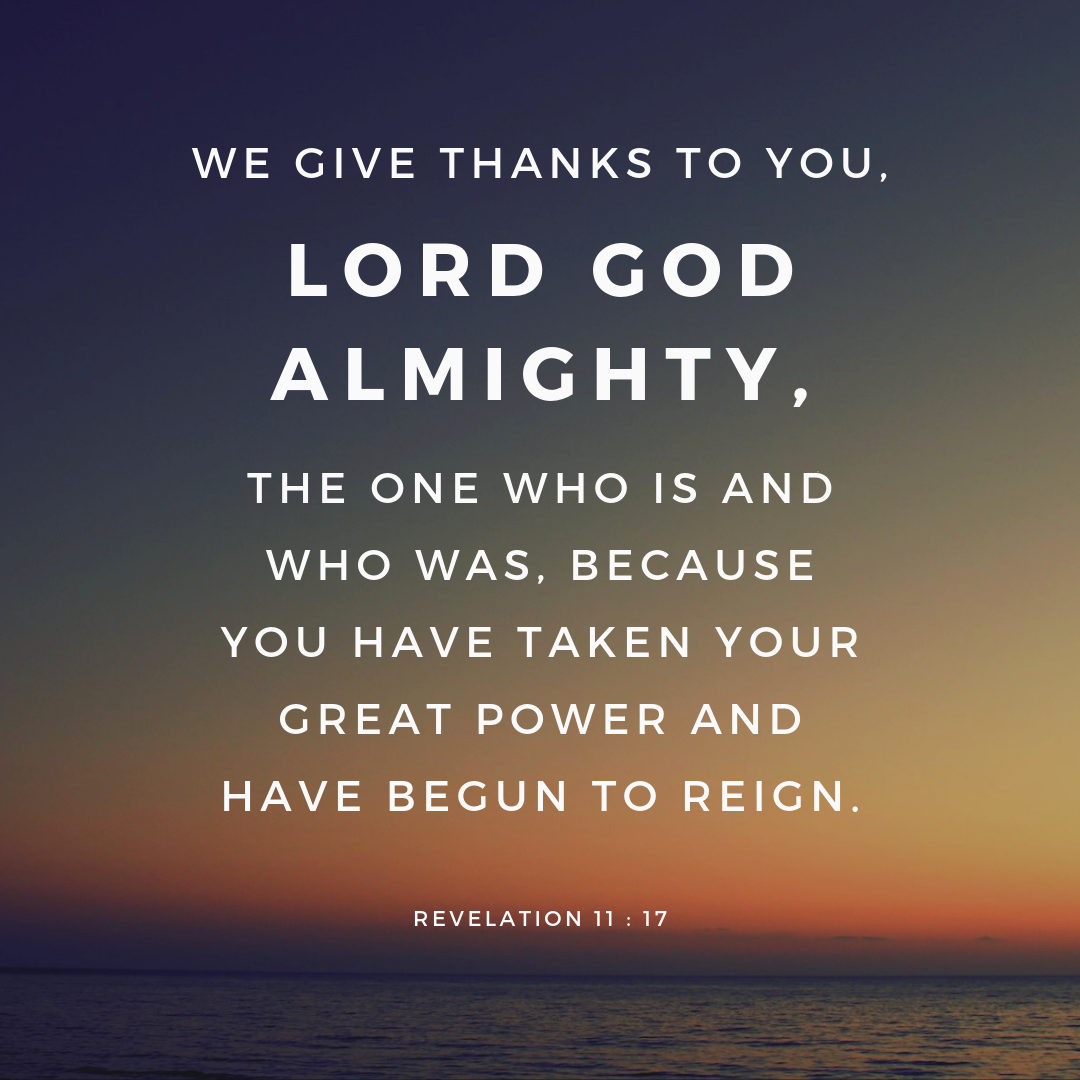
==revelation 11:17:
==revelation 11:18:
|
The nations were angry, and Your wrath has come,
And the time of the dead, that they should be judged, And that You should reward Your servants the prophets and the saints, And those who fear Your name, small and great, And should destroy those who destroy the earth.” |
The verse describes a scene where the nations are angry, but then God's wrath arrives, bringing about the time to judge the dead, reward the faithful, and destroy the destroyers of the earth.
The Nations were angry" refers to the ongoing opposition and fury of the ungodly nations against God and His people. God's Wrath Came and marks the moment when God's judgment is unleashed. A future time of reckoning where the dead will be brought before God to be judged. God's faithful prophets, saints, and those who fear His name (both small and great) will receive their reward for their service and faith. The earth-destroying forces will face God's ultimate wrath and be annihilated. The context of Revelation 11, leading up to this verse, includes the mission of two witnesses and the final sounding of the seventh trumpet, leading to a profound judgment and the establishment of God's kingdom. |
==revelation 11:19:
|
Then the temple of God was opened in heaven, and the ark of His covenant was seen in His temple. And there were lightnings, noises, thunderings, an earthquake, and great hail.
|
This vision symbolizes God's enduring presence and protection for His people, as the Ark represented His presence in Old Testament times and contained the tablets of the law, manna, and Aaron's rod. God's Temple in Heaven opens, signifying a direct access point to the divine presence. The Ark of the Covenant, which held the Ten Commandments and symbolized God's presence, is seen inside the temple. Flashes of lightning, rumblings, thunder, an earthquake, and heavy hail appear, often interpreted as signs of God's judgment or power. The sight of the Ark in heaven indicates that God's presence and protection are constant for His people, even in times of earthly conflict and disaster.
Victory Over Adversity demonstrates that no earthly power can destroy or negate the significance of God's covenant with His followers. The opening of the temple and the appearance of the Ark suggest a moment of profound divine revelation, revealing God's will and authority. |