
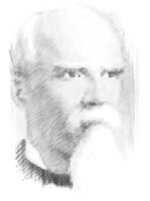
e.m. bounds
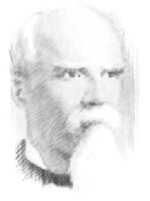 EM Bounds
When we say that prayer puts God to work, it is simply to say that man has it in his power by prayer to move God to work in His own way among men, in which way He would not work if prayer was not made. Thus while prayer moves God to work, at the same time God puts prayer to work. As God has ordained prayer, and as prayer has no existence separate from men, but involves men, then logically prayer is the one force which puts God to work in earth’s affairs through men and their prayers. Let these fundamental truths concerning God and prayer be kept in mind in all allusions to prayer, and in all our reading of the incidents of prayer in the Scriptures. If prayer puts God to work on earth, then, by the same token, prayerlessness rules God out of the world’s affairs, and prevents Him from working. And if prayer moves God to work in this world’s affairs, then prayerlessness excludes God from everything concerning men, and leaves man on earth the mere creature of circumstances, at the mercy of blind fate or without help of any kind from God. It leaves man in this world with its tremendous responsibilities and its difficult problems, and with all of its sorrows, burdens and afflictions, without any God at all. In reality the denial of prayer is a denial of God Himself, for God and prayer are so inseparable that they can never be divorced.
--EM Bounds; The Weapon of Prayer; 1931
--EM Bounds; The Weapon of Prayer; 1931
 EM Bounds
“Give ourselves continually to prayer and the ministry of the word.” The Revised Version has it, “We will continue steadfastly in prayer.” The implication of the word used here means to be strong, steadfast, to be devoted to, to keep at it with constant care, to make a business out of it. We find the same word in Col. 4:12, and in Romans 12:12, which is translated, “Continuing instant in prayer.” --EM Bounds; The Weapon of Prayer; 1931
 EM Bounds
Prayer cannot be retired as a secondary force in this world. To do so is to retire God from the movement. It is to make God secondary. The prayer ministry is an all-engaging force. It must be so, to be a force at all. Prayer is the sense of God’s need and the call for God’s help to supply that need. The estimate and place of prayer is the estimate and place of God. To give prayer the secondary place is to make God secondary in life’s affairs. To substitute other forces for prayer, retires God and materializes the whole movement
--EM Bounds; The Weapon of Prayer; 1931
--EM Bounds; The Weapon of Prayer; 1931
 EM Bounds
Nothing is more important to God than prayer in dealing with mankind. But it is likewise all-important to man to pray. Failure to pray is failure along the whole line of life. It is failure of duty, service, and spiritual progress. God must help man by prayer. He who does not pray, therefore, robs himself of God’s help and places God where He cannot help man. Man must pray to God if love for God is to exist. Faith and hope, and patience and all the strong, beautiful, vital forces of piety are withered and dead in a prayerless life. The life of the individual believer, his personal salvation, and personal Christian graces have their being, bloom and fruitage in prayer. --EM Bounds; The Weapon of Prayer; 1931
 EM Bounds
Jesus Christ commits Himself to the force of prayer. “Whatsoever ye ask in My Name,” He says, “that will I do, that the Father may be glorified in the Son. If ye shall ask anything in My Name, I will do it.” And again: “If ye abide in Me, and My words abide in you, ye shall ask what he will and it shall be done unto you.” To no other energy is the promise of God committed as to that of prayer. Upon no other force are the purposes of God so dependent as this one of prayer. The Word of God dilates on the results and necessity of prayer. The work of God stays or advances as prayer puts forth its strength. Prophets and apostles have urged the utility, force and necessity of prayer. “I have set watchmen upon thy walls, O Jerusalem, which shall never hold their peace day nor night. Ye that make mention of the Lord, keep not silence, and give him no rest, till he establish, and till he make Jerusalem a praise in the earth.” Prayer, with its antecedents and attendants, is the one and only condition of the final triumph of the Gospel. It is the one and only condition which honors the Father and glorifies the Son. Little and poor praying has weakened Christ’s power on earth, postponed the glorious results of His reign, and retired God from His sovereignty. Prayer puts God’s work in His hands, and keeps it there. It looks to Him --EM Bounds; The Weapon of Prayer; 1931
 EM Bounds
When Solomon closed his great prayer which he offered at the dedication of the Temple, God appeared to him, approved him, and laid down the universal principles of His action. In 2 Chron. 7:12-15 we read as follows: “And the Lord appeared to Solomon by night and said unto him, I have heard thy prayer, and have chosen this place to myself, for a house of sacrifice. “If I shut up heaven that there be no rain, or if I command the locusts to devour the land, or if I send pestilence among the people; if my people which are called by my name, shall humble themselves and pray, and seek my face, and turn from their wicked ways, then will I hear from heaven, and will forgive their sin, and will heal their land. Now my eyes shall be open, and my ears attentive to the prayer that is made in this place.” In His purposes concerning the Jews in the Babylonish captivity (Jeremiah 29:10-13) God asserts His unfailing principles: “For thus saith the Lord, that after seventy years be accomplished, at Babylon, I will visit you, and perform my good word toward you, in causing you to return to this place. For I know the thoughts that I think toward you, saith the Lord, thoughts of peace, and not of evil, to give you an expected end. Then shall ye call upon me, and ye shall go and pray unto me, and I will hearken unto you. And ye shall seek me and find me, when ye shall search for me with all your heart.” In Bible terminology prayer means calling upon God for things we desire, asking things of God. Thus we read: “Call upon me and I will answer thee, and will show thee great and mighty things which thou knowest not” (Jeremiah 33:3). “Call upon me in the day of trouble, and I will deliver thee” (Psalm 50:15). “Then shalt thou call, and the Lord shall answer; thou shalt cry, and he shall say, Here I am” (Isaiah 58:9).
--EM Bounds; The Weapon of Prayer; 1931
--EM Bounds; The Weapon of Prayer; 1931